
For decades, the mental image of a patient lift has been dominated by the full-body sling and the overhead track. While these devices remain essential for non-weight-bearing individuals, a more specialized and often more therapeutic tool has emerged for a specific patient population: those who can bear weight. The power sit to stand lift is not merely a transfer device; it is a rehabilitation catalyst. It bridges the gap between total dependence and active mobility, allowing patients to engage in the standing process while significantly reducing the physical toll on healthcare workers and family caregivers. Unlike a passive lift that carries a patient from one point to another, a powered standing lift encourages active participation. The patient’s feet remain planted on a platform, their knees are braced, and the lift’s motor provides the controlled upward force needed to transition from a seated to a standing position. This distinction is critical. It preserves the patient’s dignity, maintains muscle memory for standing, and supports the natural biomechanics of the lower body. For caregivers, this technology transforms a physically demanding, high-risk task into a safe, single-person operation, preventing the cumulative back injuries that plague the caregiving profession.
The Biomechanics Behind the Powered Standing Transfer
Understanding the mechanical advantage of a power sit to stand lift requires a look at the physics of a standard transfer. Manually lifting a patient from a chair involves a caregiver often stooping, twisting, and bearing an asymmetric load. The lumbar spine is placed under immense shear force. In contrast, a powered standing lift operates on a principle of controlled pivot. The patient sits on a sling or a molded seat that is positioned behind their back and under their thighs. As the lift activates, the boom rises and moves forward in an arc. This arc mimics the natural forward momentum of a person standing up, but the motor does the heavy lifting.
The key components are the knee pads and the footplate. The knee pads prevent the patient from sliding forward as the lift rises, creating a stable pivot point at the knees. The footplate provides a non-slip surface that gives the patient tactile feedback, encouraging them to push through their feet. This is where the term "power" becomes crucial. A manual standing lift requires the caregiver to pump a lever, which still introduces a degree of physical effort and can result in a jerky, uneven motion. A powered model, driven by a rechargeable battery, offers a smooth, consistent, and infinitely variable speed. This allows the caregiver to control the pace of the transfer, making it less frightening for the patient and ensuring proper body alignment throughout the movement. The lift does not just pull the patient up; it guides them through a mechanically sound standing arc, reducing the risk of falls, knee strain, and shoulder dislocation that can occur with improper manual techniques. This engineered approach to weight redistribution is the cornerstone of why facilities are moving away from manual methods and investing in a durable power sit to stand lift for their heavier or more complex patients.
Clinical Outcomes and Caregiver Risk Mitigation
The adoption of powered sit-to-stand technology is driven by two powerful forces: improved patient outcomes and the reduction of caregiver injuries. From a clinical perspective, a powered standing lift is not just a transfer device; it is a therapeutic tool. For patients recovering from hip or knee replacements, for example, the ability to stand with assisted support is vital for preventing contractures, improving circulation, and maintaining bone density. The lift allows these patients to achieve a standing position earlier in their recovery than they might otherwise be able to, which directly correlates with faster discharge times and improved functional independence. For patients with neurological conditions like Parkinson’s disease, the repetitive, supported practice of standing can help maintain neural pathways associated with gait initiation.
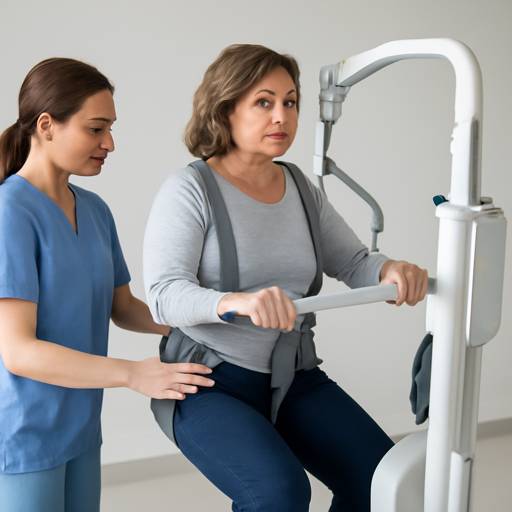
From the caregiver perspective, the data is undeniable. The Bureau of Labor Statistics consistently ranks nursing assistants and home health aides among the occupations with the highest rates of musculoskeletal disorders. Manual patient handling is the primary culprit. A single transfer can place hundreds of pounds of pressure on a caregiver’s spine. The introduction of a power sit to stand lift effectively eliminates the manual lift. The caregiver’s role shifts from a lifter to a guide and safety monitor. They are responsible for positioning the sling, stabilizing the patient’s knees, and operating the hand control. This reduction in physical strain has a direct impact on staff retention, sick days, and workplace morale. Furthermore, these lifts are designed with safety redundancies. Emergency stop buttons, anti-slip footplates, and manual override functions ensure that even in a power failure, the patient can be safely lowered. The integration of a powered standing lift into a care plan is a documented strategy for preventing falls during transfers, as the patient is secured in a harness and supported by the lift frame throughout the entire process, from initial sit to final stand.
Real-World Applications: Case Studies in High-Acuity Care
The practical utility of the power sit to stand lift is best illustrated through specific care scenarios. One compelling example is the case of a bariatric patient in a sub-acute rehabilitation facility. A 350-pound post-surgical patient needed to be transferred from bed to a specialized chair four times daily. A manual standing lift was deemed too physically demanding for the two-person team, and a full-body sling lift was uncomfortable and embarrassing for the patient. The facility introduced a high-capacity power sit to stand lift designed for bariatric use. The difference was immediate. The patient could actively participate by pushing with his legs, which aided his circulation and accelerated his recovery. The caregivers reported a dramatic decrease in perceived exertion, and the patient’s dignity was preserved because he was in a standing position, not suspended in a sling. The lift’s battery allowed for untethered movement, freeing the team from being plugged into a wall outlet.
Another critical application is in home care environments, where space is limited and caregiver support is often minimal. A case involving a stroke survivor with left-sided weakness illustrates this point. The patient had hemiparesis—weakness on one side of the body—making standing transfers extremely unstable. A family caregiver, a 65-year-old spouse, was attempting manual transfers and was at high risk of injury. A power sit to stand lift was deployed. The sling was applied while the patient was seated in a standard armchair. The lift’s slim base fit under the chair easily. With the knee pad braced against the weaker leg, the patient was able to use his stronger leg to push, while the lift compensated for the lack of strength on the affected side. This controlled environment prevented the dangerous tilting that often occurs when a caregiver tries to support a stroke patient alone.
Finally, consider the use in long-term care for patients with progressive conditions like ALS or multiple sclerosis. As these patients lose core strength, their ability to stand diminishes. A power sit to stand lift provides a safe way for them to maintain weight-bearing activities for as long as clinically appropriate. It allows them to be transferred to a commode, a shower chair, or a dining table with minimal disruption to their day. The key takeaway from these examples is the versatility of the device. Whether the challenge is extreme weight, lateral weakness, or caregiver frailty, the lift adapts. It provides a reproducible, safe, and therapeutic transfer that manual methods simply cannot match, making it an indispensable tool in modern patient care. The integration of such technology directly addresses the "triple aim" of healthcare: improving the patient experience, improving the health of populations, and reducing the per capita cost of care by preventing falls and staff injuries.