
Curiosity thrives where big ideas meet hands-on exploration. Whether charting the night sky, modeling human cognition, or building teams of cooperative robots, students can tackle ambitious questions with accessible tools and rigorous thinking. The themes here unite observational savvy, experimental design, and engineering creativity, guiding learners to transform classroom concepts into publishable findings, competition-ready prototypes, and portfolio-grade research. By blending open datasets, affordable hardware, and clear research methods, learners can frame problems that matter—and solve them with evidence.
Exploring the Cosmos: Practical astronomy research ideas and Space Telescope Projects
Astrophysics becomes tangible when students translate wonder into a testable plan. Strong astronomy research ideas often start with an observation question tethered to data a small team can gather or obtain. For local observations, students can measure light pollution over time using a smartphone sky-brightness app, modeling trends by weather, season, or municipal policy changes. A DSLR on a tripod can capture star fields to estimate limiting magnitude and track how local lighting regulations influence the Milky Way’s visibility. Meteor counts—optical or via radio scatter—enable long-term comparisons that connect to atmospheric conditions and solar activity cycles.
For deeper targets, archival surveys open the Universe without leaving home. The Mikulski Archive for Space Telescopes (MAST) hosts Hubble and TESS data; students can download curated light curves to search for exoplanet transits, refine orbital periods, or investigate transit timing variations that hint at additional planets. Galaxy Zoo and related citizen-science platforms offer morphological classification datasets perfect for training simple machine-learning models, letting students compare human labels to algorithmic predictions. These projects evolve naturally: a pilot study on spiral-bar frequency can grow into a statistical paper analyzing environment-density correlations across clusters.
Ambitious learners can align observational campaigns with Space Telescope Projects. While winning time on major observatories is competitive, students can conduct “shadow” studies by analyzing publicly released Hubble, JWST, or TESS observations that match their hypotheses. A case study blueprint: select a nearby star with known exoplanets, retrieve multi-sector TESS photometry, apply detrending and transit-fitting (e.g., using lightkurve or exoplanet toolkits), and compare derived parameters to literature. Uncertainties—propagated from photometric noise and systematics—become a teachable moment in error analysis.
Instrument-building adds another dimension. A cardboard spectroscope with a diffraction grating can resolve sodium versus LED streetlights, turning urban skies into a laboratory on emission lines. With an inexpensive tracking mount, students can attempt photometry of RR Lyrae or eclipsing binaries, mapping period–luminosity relations. For orbital mechanics, they can analyze Two-Line Elements and simulate satellite passes with Python libraries to predict visibility windows for CubeSat downlinking or even plan collaborative observation schedules across schools. The thread tying these projects together is methodological rigor: hypothesis pre-registration, calibration with standard stars or dark frames, and transparent data processing pipelines that support replication.
Decoding Thought: Rigorous cognitive science for high school
Human cognition offers a research frontier students can explore with careful ethics and clean design. In cognitive science for high school, compelling questions are measurable: How does sleep affect working memory? Can spaced repetition outperform cramming? Do distractions alter reaction time differently for music versus spoken words? The path from idea to insight runs through operational definitions, random assignment, and clear procedures. Students can implement classic paradigms—Stroop interference, n-back tasks, serial position effects, change blindness—using free tools such as PsychoPy, OpenSesame, or web-based jsPsych. Even Google Forms paired with simple timers can yield usable data when tasks are framed precisely.
Ethics and privacy are non-negotiable. Obtain informed consent, minimize risk, anonymize data, and avoid collecting sensitive information. Pre-register hypotheses and analysis plans in a class wiki or an open notebook to reduce bias. Sample sizes can be small if students compute effect sizes and confidence intervals, interpret power, and acknowledge limitations. For analysis, JASP or Python’s pandas/statsmodels stack handle t-tests, ANOVAs, and mixed models, while visualization libraries create intuitive plots of reaction times, accuracy, or learning curves over sessions.
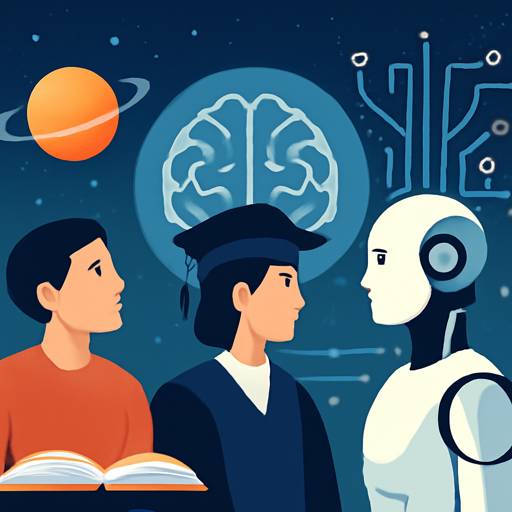
Real-world relevance strengthens motivation. A cohort might test the impact of “phone proximity” on sustained attention by comparing performance under three conditions: phone in another room, phone visible face-down, and phone active with silent notifications. Another group could model memory consolidation by spacing study sessions across days and measuring recall after a one-week delay. Case studies can extend to cognitive offloading (checklist usage in complex tasks) or metacognition (confidence judgments versus actual performance). Students can also replicate well-known findings, learning from both successful and null results; a transparent null, with thoughtful discussion of noise, task fidelity, or underpowered samples, teaches more about science than a cherry-picked “positive.”
Advanced options bridge psychology and neuroscience without requiring a lab. Low-cost EEG headbands can demonstrate event-related changes during attention tasks, though students should focus on artifact handling and signal preprocessing rather than medical claims. Eye-tracking with a webcam-based algorithm can approximate gaze distribution in visual search, enabling heatmaps of attention across stimulus layouts. Computational modeling invites deeper theory: students can fit a drift–diffusion model to decision data, or simulate reinforcement learning with varying exploration rates to explain risk-taking under uncertainty. Across projects, the essentials remain: reliability checks, preregistration, and openly shared task code and anonymized datasets to support replication and peer feedback.
Embodied Intelligence: humanoid robotics for students and collective swarms
Mechanical bodies and distributed teams reveal how intelligence emerges from constraints and collaboration. For humanoid robotics for students, a great first milestone is stable standing and controlled gait on flat ground. Students learn to map joint space to task space with inverse kinematics, test center-of-mass projections over the support polygon, and experiment with compliant control to absorb shocks. Affordable microcontrollers drive hobby servos, while IMUs provide orientation feedback for balance. Simulation environments—Webots, Gazebo, or Isaac Sim—enable rapid iteration on gait parameters and fall-safe testing before deploying to hardware. Vision pipelines using lightweight neural nets can classify fiducial markers or colored objects for manipulation and navigation challenges.
Design thinking turns constraints into creativity. When budgets limit actuators, students can prototype hybrid morphologies (e.g., wheeled feet for energy-efficient locomotion) or modular arms that reconfigure from two to three degrees of freedom. Curriculum-aligned milestones include: 1) model and simulate a sagittal-plane gait; 2) implement PID loops for hip/knee control; 3) integrate IMU data for push-recovery; 4) add a simple perception task like reaching for a colored cube. Evaluation metrics—time-to-stand, step accuracy, and energy per meter—make progress measurable. Case study inspirations range from RoboCup Humanoid League tasks to homegrown trials like ramp ascents or object handovers that test coordination and safety envelopes.
Swarm systems turn many simple robots into a resilient whole. Students can implement flocking with Reynolds’ Boids rules—separation, alignment, cohesion—and extend to formation control with consensus algorithms. Stigmergy-based foraging, where robots drop virtual “pheromone” signals via LEDs or shared maps, showcases decentralized task allocation. Inexpensive platforms (micro:bit rovers, Kilobot-style clones, or custom PCB bots) communicate via Bluetooth or IR to negotiate roles. Performance metrics—coverage rate, time-to-find target, or robustness under robot dropout—teach reliability engineering and fault tolerance. Linking theory to practice, learners can compare centralized versus distributed control, or test how network topology affects convergence speed.
Interdisciplinary projects amplify impact. A vision-guided humanoid can collaborate with a swarm for warehouse sorting: swarms perform coarse exploration and tagging, while the humanoid handles dexterous picks in constrained spaces. Similarly, emergency-response simulations allow swarms to map blocked corridors as a humanoid executes door-opening and aid delivery. For deeper dives, graph theory quantifies connectivity, while information theory measures communication efficiency under bandwidth constraints.
For curated roadmaps, kits, and mentorship aligned to classroom timelines, explore Swarm robotics student projects that scaffold algorithms from simulation to multi-robot deployment. Embedding reflective write-ups—design rationales, failure analyses, and next-step hypotheses—turns prototypes into real research contributions. By combining resilient swarm behaviors with human-like dexterity, students experience how local rules create global intelligence, and how robust design emerges from iteration, metrics, and honest documentation.
